The Monthly Cost of Renting in Raleigh, With the Numbers
A sourced monthly cost stack for renting in Raleigh: Duke Energy Progress Schedule RES against the Utilities Commission all-in comparison, Raleigh Water's CCF tiers, GoRaleigh fares, the highway use tax and the statutory deposit caps, read on 13 October 2026.
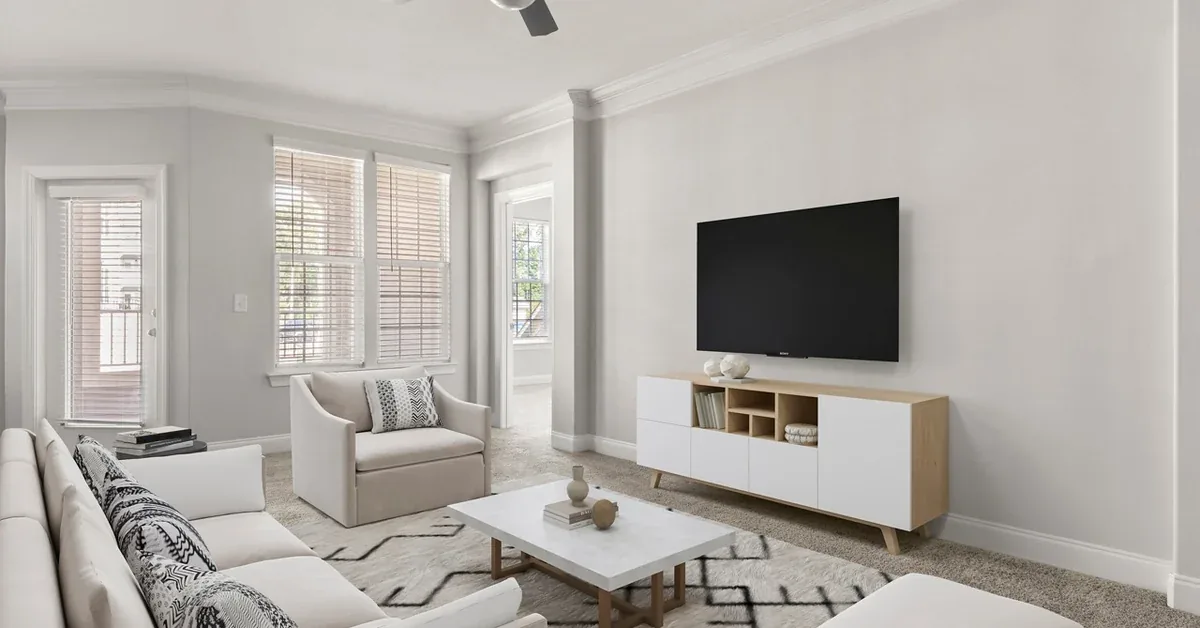
Yesterday this community listed a three-bedroom home. Today it does not. Twenty-one homes across five floor plans are listed at The Villages at Raleigh Beach on 13 October 2026, and all of them are one-bedroom or two-bedroom. That is the first useful fact about renting in Northeast Raleigh: inventory turns over faster than any published figure keeps up with, which is why every number below carries the date it was read and the document it came from.
What is actually listed, and how fast it moves
Thirteen one-bedroom homes are listed between $1,232 and $1,379, at 687 to 934 square feet. That is $1.42 to $1.79 per square foot, and a 247 square foot spread inside one bedroom count is unusually wide, so the per-foot figure matters more here than the headline rent.
Eight two-bedroom homes are listed between $1,611 and $1,731, at 1,183 to 1,263 square feet. The per-foot band is $1.34 to $1.39, a spread of five cents. Two-bedroom pricing here is effectively one rate applied to slightly different boxes, which makes that choice a question of layout rather than value.
The vanished three-bedroom is the data point, not a footnote. A plan listed one day and gone the next tells you the realistic planning horizon on any specific home is days, not weeks. Price the band, not the unit. We keep the current one-bedroom listings in Raleigh and the lower end of the Raleigh market written up separately.
Electricity: the tariff rate, and the rate you actually pay
Duke Energy Progress's filed residential tariff is Schedule RES, NC Second Revised Leaf No. 500, effective for service rendered on and after 1 October 2025 under NCUC Docket No. E-2, Sub 1300. The basic customer charge is $14.00 a month in every season. From May through September, every kilowatt hour is 12.623 cents. From October through April, the first 800 kilowatt hours are 12.623 cents and everything above that is 11.623 cents.
That winter step is the opposite shape from most tariffs. Heavy winter usage gets cheaper at the margin, not dearer, because the rate drops by a cent after 800 kilowatt hours. There is no summer step at all: a heavy August and a light May price identically per unit.
The tariff is not the bill, and the gap is measurable. Schedule RES lists eight riders that must be added to the cents shown, plus a Renewable Energy Portfolio Standard adjustment, a storm securitization charge and state sales tax. The Public Staff of the North Carolina Utilities Commission publishes an all-in comparison, and its figures applicable as of 1 September 2026 put a Duke Energy Progress bill at 1,000 kilowatt hours at $176.85 in summer and $174.85 in winter.
Run the tariff by hand and the difference falls out exactly. At 1,000 kilowatt hours in summer the schedule gives $14.00 plus $126.23, or $140.23; in winter $14.00 plus $100.98 plus $23.25, or $138.23. The Public Staff figure is $36.62 higher in both seasons, which is 3.66 cents per kilowatt hour of riders, REPS, securitization and tax. The effective all-in rate at 1,000 kilowatt hours is about 17.7 cents, not 12.6.
Fixed charges punish small usage. At 300 kilowatt hours the Public Staff figure is $64.12 in both seasons, an effective 21.4 cents per kilowatt hour. The less you use, the more each unit costs, because $14.00 of customer charge spreads across fewer of them. A 687 square foot home does not save proportionally.
Raleigh Water bills in CCF, and the first tier ends at 2,992 gallons
The City of Raleigh's rate schedule effective 1 July 2026 is denominated in hundred cubic feet, and one CCF is 748 gallons. Inside the city, residential water is $3.11 per CCF for the first 4 CCF, $5.41 from 5 to 20, and $6.97 at 21 and above. Wastewater, associated and metered, is a flat $5.31 per CCF with no tiers. A watershed protection fee of $0.1122 per CCF applies to all potable water.
Convert that and the ranking inverts. Tier one water is $4.16 per thousand gallons, wastewater is $7.10 and tier two water is $7.23. Taking the water away costs more than bringing it in, until you use enough to reach the second tier, at which point they cost about the same.
The fixed side is $18.47 a month before a tap is opened. On a five-eighths inch meter inside the city, the water base charge is $8.14, the water infrastructure replacement charge is $1.50 and the wastewater base charge is $8.83.
The tier boundary lands lower than people expect. Four CCF is 2,992 gallons, and that is where the price per CCF jumps 74 per cent. At exactly 4 CCF, water is $12.44, wastewater $21.24, the watershed fee $0.45 and fixed charges $18.47, for $52.60. At 6 CCF the total is $74.26. The marginal cost of the fourth CCF is $8.53 and of the fifth $10.83, a 27 per cent step for the same 748 gallons.
How any of this reaches a renter depends on the lease. Some communities bill water directly, some submeter, some allocate. We do not estimate a property's charges: ask the leasing office for the published fee schedule in writing before you sign.
See current floor plans and availability at The Villages at Raleigh Beach
GoRaleigh is not fare-free, and a month of riding has a break-even
Fares are being collected. GoRaleigh's published fare page lists a one-way full fare of $1.25 and a reduced fare of $0.60. A Local Day Pass is $2.50 full and $1.25 reduced, a 7-Day Pass is $12.00 and $6.00, and a 31-Day Pass is $40.00 and $20.00. Some riders pay nothing: seniors aged 65 and over with valid identification, youth aged 13 to 18 with a GoPass, children aged 12 and under, and eligible adults aged 19 to 64 through the Transit Assistance Program.
The day pass is worth buying at two rides, and the monthly at thirty-two. A Local Day Pass costs exactly two single fares, so any day with a return trip plus one errand is cheaper on the pass. The 31-Day Pass breaks even at 32 one-way rides. Two trips a day across 21 working days is 42 rides, $52.50 in single fares against $40.00 on the pass, with weekends thrown in.
A full year of 31-day passes is $480. Hold that figure for the section below, because the tax on putting a car on the road in North Carolina is charged once and in full.
The three per cent you pay once, to put a car on the road
North Carolina charges a highway use tax instead of sales tax when a vehicle title is transferred. The NCDMV states this plainly, and G.S. 105-187.3 sets the rate: "The tax rate is three percent (3%)." On a vehicle with a $20,000 purchase price, that is $600, payable once at titling.
The statutory cap does not help an ordinary car. G.S. 105-187.3 sets a maximum tax of $2,000 for each certificate of title issued for a Class A or Class B commercial motor vehicle and for each certificate issued for a recreational vehicle. A passenger car has no cap, which only matters above roughly $66,667 of purchase price.
Some transfers are exempt, and the list is specific. Under G.S. 105-187.6 the NCDMV lists exemptions including a gift between spouses, a parent and child or a stepparent and stepchild, a transfer on separation or divorce, a transfer by will or intestacy, removal of a co-owner, and a transfer to a revocable trust where the owner is sole beneficiary. Each requires the exemption certificate, not a verbal claim.
Your deposit is capped by statute, and the clock is thirty days
North Carolina caps residential security deposits by tenancy length. G.S. 42-51(b) sets the limit at two weeks' rent for a week-to-week tenancy, "one and one-half months' rent if a tenancy is month to month", and "two months' rent for terms greater than month to month". Against the highest two-bedroom rent listed today, $1,731, a twelve-month lease cannot carry a deposit above $3,462, and a month-to-month arrangement cannot exceed $2,596.50.
The permitted uses are a closed list. G.S. 42-51(a) opens with "Security deposits for residential dwelling units shall be permitted only for the following" and then enumerates them: unpaid rent and utilities, damage to the premises including smoke and carbon monoxide alarms, court costs, and certain re-renting and storage costs. Anything outside that list is not a permitted use of your deposit money.
The accounting deadline is thirty days, with a defined extension. G.S. 42-52 requires the landlord to itemise any damage in writing and deliver it with the balance "no later than 30 days after termination of the tenancy and delivery of possession of the premises to the landlord". If the amount of the claim cannot be determined in that window, the landlord must give an interim accounting within 30 days and a final accounting within 60 days of termination and possession. If your address is unknown, the balance is held for at least six months for you to collect, so leave a forwarding address.
North Carolina does not permit local rent control
The preemption is statutory and it is broad. G.S. 42-14.1(a) bars counties and cities from adopting, maintaining or enforcing any ordinance or resolution "which regulates the amount of rent" for privately owned residential or commercial rental property. No Raleigh ordinance can cap what a private landlord charges, and none can cap an increase.
Subsection (b) was added in 2024 and extends the preemption. It bars local rules prohibiting a landlord from refusing to rent to someone because their lawful source of income to pay rent includes funding from a federal housing assistance programme. The section dates from 1987 and was amended by Session Law 2024-47.
Subsection (c) carves out four exceptions. A locality may regulate rent on property it or an authority it created owns, may agree rents with private parties for subsidised rental property, may restrict rent on property assisted with Community Development Block Grant funds, and may apply ordinances to owners receiving county or city funding or incentives. None reaches an ordinary private lease. For the wider picture of this side of the city, see our guide to renting in East Raleigh.
What the 2027 Wake County revaluation does, and what it does not
Wake County's next countywide revaluation is effective 1 January 2027, and the cycle is shortening. The county's tax administration states that future revaluations will be effective every two years, against a state requirement that counties revalue at least once every eight years. The last revaluation took effect on 1 January 2024.
The published calendar is specific. Results go to the Board of Commissioners on 19 January 2027, Notices of Assessed Value begin arriving by 22 January 2027, and the planned appeal deadline is 30 April 2027. The Board must approve the Schedule of Values before it takes effect.
Here is the mechanism, and here is where honesty requires a stop. A revaluation resets assessed values so each reflects fair market value. Your bill is that value multiplied by a rate, and the county is explicit that the rate is set each year by elected county and municipal officials, separately from the revaluation. Property tax is an operating cost for the owner of an apartment community. What Wake County does not publish is any figure quantifying how a revaluation moves rents, and we will not invent one. What the calendar gives you is a date: if your lease renews in the first half of 2027, the new assessed value and the new rate will both be known by then.
Check live availability and pricing at The Villages at Raleigh Beach
This is general information, not legal, tax or financial advice. Statutes, tariffs and rate schedules change, every figure above carries the date it was read, and you should confirm the current rules and rates for your own jurisdiction before relying on them. For the community's own account of its homes, see what renters should know about The Villages at Raleigh Beach.
The Villages at Raleigh Beach is an AIR Communities property, and this guide is published by the community. Pricing, availability and fees were checked against the community's own published listings on 13 October 2026 and change frequently. Utility, transit, tax and legal figures come from Duke Energy Progress Schedule RES effective 1 October 2025, the North Carolina Utilities Commission Public Staff comparison applicable as of 1 September 2026, the City of Raleigh rate schedule effective 1 July 2026, GoRaleigh's published fares, N.C.G.S. 42-51, 42-52, 42-14.1 and 105-187.3, the NCDMV and Wake County Tax Administration, all read on 13 October 2026. Confirm current terms with the leasing office before making a decision.
Frequently asked questions
How much is rent at The Villages at Raleigh Beach right now?
Twenty-one homes across five floor plans were listed on 13 October 2026: thirteen one-bedroom homes from $1,232 to $1,379 and eight two-bedroom homes from $1,611 to $1,731. Availability changes daily.
Are there three-bedroom apartments available?
Not in today's listing set. A three-bedroom plan was listed the previous day and is no longer listed, which is a fair indication of how quickly this inventory moves.
What is the Duke Energy Progress residential electricity rate?
Under Schedule RES, effective 1 October 2025, the basic customer charge is $14.00 a month. Energy is 12.623 cents per kilowatt hour from May through September, and from October through April it is 12.623 cents for the first 800 kilowatt hours and 11.623 cents above that.
Why is my Raleigh electricity bill higher than 12.6 cents a kilowatt hour?
Because the schedule lists eight riders, a Renewable Energy Portfolio Standard adjustment, a storm securitization charge and state sales tax on top of the tariff rate. The Utilities Commission Public Staff puts a 1,000 kilowatt hour bill at $176.85 in summer, an effective 17.7 cents.
What are Raleigh's water and sewer rates?
Effective 1 July 2026, inside the city, water is $3.11 per CCF for the first 4 CCF, then $5.41 and $6.97. Wastewater is a flat $5.31 per CCF. Base charges on a five-eighths inch meter are $8.14 for water, $1.50 for infrastructure replacement and $8.83 for wastewater.
How many gallons is a CCF?
The City of Raleigh states that one CCF is 748 gallons, so the first water tier runs to 2,992 gallons a month before the per-CCF price rises by 74 per cent.
Is GoRaleigh free to ride?
No. Fares are being collected: $1.25 for a one-way full fare and $40.00 for a 31-Day Pass. Seniors aged 65 and over with valid identification, youth aged 13 to 18 with a GoPass, children aged 12 and under and eligible adults through the Transit Assistance Program ride at no charge.
How much tax do I pay to title a car in North Carolina?
G.S. 105-187.3 sets the highway use tax at three per cent, charged instead of sales tax when a title is transferred. On a $20,000 vehicle that is $600. The $2,000 maximum applies only to Class A and Class B commercial vehicles and recreational vehicles.
What is the maximum security deposit in North Carolina?
G.S. 42-51(b) caps it at two weeks' rent for a week-to-week tenancy, one and a half months' rent month to month, and two months' rent for any longer term. G.S. 42-52 requires an itemised accounting and the balance within 30 days of termination and delivery of possession.
Can Raleigh cap rent increases?
No. G.S. 42-14.1(a) bars counties and cities from adopting, maintaining or enforcing any ordinance that regulates the amount of rent for privately owned property, with narrow exceptions for publicly owned, subsidised and locally assisted housing.